
Understanding and Explaining Behaviour Change Models
- drbobcarey
- Mar 10
- 4 min read
When we think about changing behaviour, especially in children who face challenges, it can feel like trying to solve a complex puzzle. You might wonder, Why does this behaviour keep happening? or How can I help create lasting change? I’ve been there, and I know how overwhelming it can be. But understanding the frameworks behind behaviour change can be a game-changer. Today, I want to walk you through the fascinating world of behaviour change models, focusing on systemic approaches that look beyond just the individual.
Why Explaining Behaviour Change Models Matters
Imagine trying to fix a leaking pipe without knowing where the leak is or how the plumbing works. That’s what it’s like trying to address challenging behaviours without a clear model. Behaviour change models give us a map. They help us understand the why and how behind actions, guiding us to more effective strategies.
These models aren’t just academic theories. They are practical tools that can empower you to create meaningful shifts in behaviour. Whether you’re a parent or a professional, knowing these models helps you see the bigger picture. It’s like switching from a flashlight to a floodlight - suddenly, you see the whole room, not just a small corner.
One of the most powerful ideas in this space is the systemic behaviour change models explained approach. This perspective reminds us that behaviour doesn’t happen in isolation. It’s influenced by family dynamics, community, environment, and even cultural norms. When we consider all these layers, we can design interventions that truly stick.

What Are the 5 Stages of Behavior Change Model?
You might have heard of the 5 stages of behaviour change. This model is a classic and a great starting point for understanding how change unfolds over time. Here’s a quick breakdown:
Precontemplation - At this stage, the person isn’t yet thinking about change. They might not see the behaviour as a problem.
Contemplation - Now, they start to recognize the issue and consider making a change.
Preparation - This is the planning phase. They’re getting ready to take action.
Action - The person actively works on changing the behaviour.
Maintenance - The new behaviour is sustained over time, and the risk of relapse decreases.
This model is helpful because it acknowledges that change is a process, not a single event. It also highlights the importance of readiness. For example, if a child or individual isn’t ready to change, pushing too hard might backfire.
In practice, you might see a child move back and forth between these stages. That’s normal. Patience and support are key. Encouraging small steps and celebrating progress can make a big difference.
Diving Deeper: Systemic Behaviour Change Models
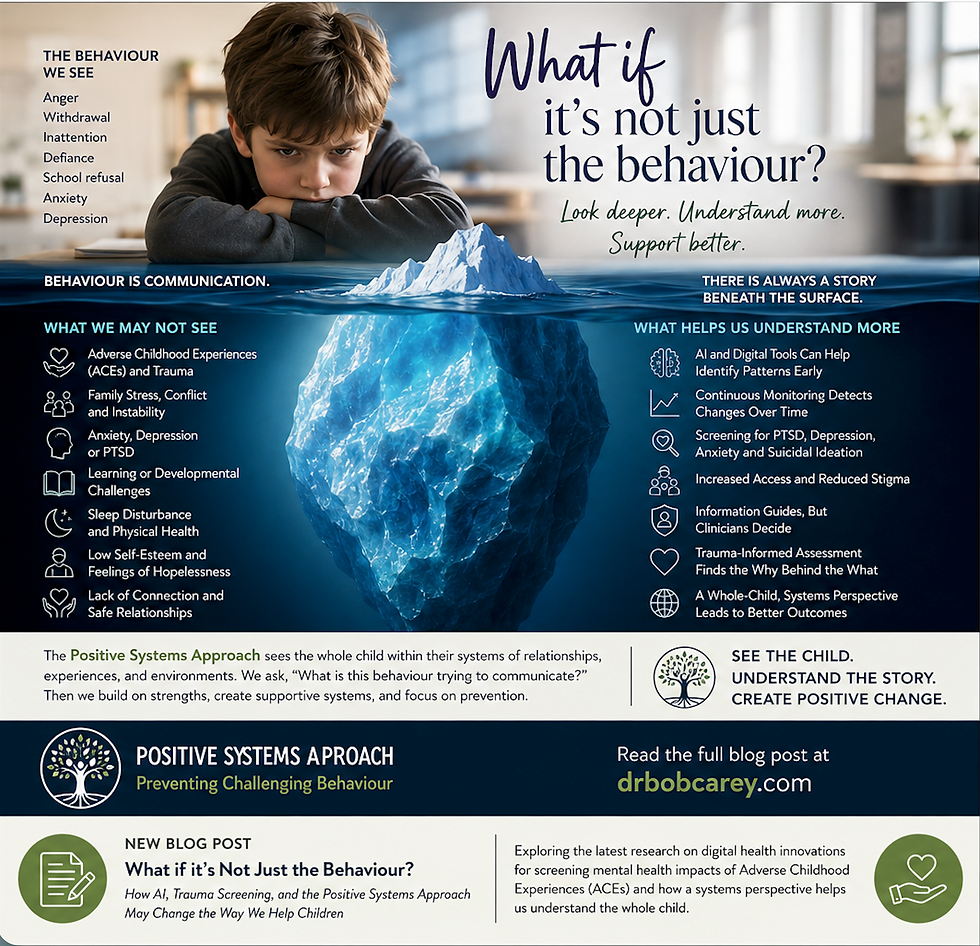
Now, let’s zoom out a bit. While the 5 stages model focuses on the individual, systemic behaviour change models look at the whole ecosystem around that person. Think of it like a spider web - every strand affects the others.
In families with children who have challenging behaviours, this approach is especially valuable. It helps us understand how family routines, school environments, peer relationships, and even community resources interact to influence behaviour.
For example, a child’s outburst might be linked not just to their internal feelings but also to stress at home, lack of support at school, or inconsistent routines. By addressing these interconnected factors, we create a stronger foundation for change.
One practical way to apply this is through the Positive Systems Approach. This method encourages us to look at patterns and relationships rather than isolated incidents. It’s about building connections and creating environments where positive behaviours can flourish naturally.
Practical Tips for Applying Behaviour Change Models
Understanding these models is one thing, but how do you put them into action? Here are some tips that have helped me and many others:
Start with empathy: Try to see the world through the child’s eyes. What might they be feeling or needing?
Map the system: Identify key influences around the child - family, school, friends, community.
Set small, achievable goals: Change doesn’t happen overnight. Celebrate every small win.
Use consistent routines: Predictability can reduce anxiety and challenging behaviours.
Collaborate with others: Share insights with teachers, therapists, and other caregivers to create a unified approach.
Reflect and adjust: Behaviour change is dynamic. Be ready to tweak your strategies as you learn more.
Remember, you’re not alone in this journey. Every step forward, no matter how small, is progress.
Embracing Change with Compassion and Patience
Change can feel like climbing a mountain. Sometimes the path is steep, and the summit seems far away. But with the right tools and mindset, every step becomes manageable.
By embracing systemic behaviour change models, you’re not just addressing symptoms. You’re nurturing growth, connection, and understanding. This approach honors the complexity of human behaviour and respects the unique story of each child and family.
If you ever feel stuck, take a moment to breathe and remind yourself that change is a journey. With warmth, patience, and a clear map, you can help create environments where positive behaviours thrive. Together, we can build more supportive spaces where every child has the chance to shine.
If you’re ready to take the next step, consider reaching out to professionals who specialize in the Positive Systems Approach. Their expertise can provide personalized guidance tailored to your unique situation. Remember, every journey begins with a single step - and you’re already on your way.


Comments