
Remote Family Behaviour Support: Empowering Change from a Distance
- drbobcarey
- 1 day ago
- 4 min read
When kids are struggling with behaviour, it can wear you down. You try things, they don’t work, and after a while it just feels like you’re guessing. Most parents I talk to have already tried a lot—reward systems, consequences, talking it through, ignoring it, tightening things up. Some of it helps for a bit, then it stops. Or it works with one situation and not another. That’s usually the point where people start to feel stuck. You don’t have to keep guessing. And you don’t have to get in a car and drive somewhere to get help anymore. Remote behaviour support is just talking with someone who knows this area—over video, phone, whatever works—and working through what’s going on in your real life.

That last part matters more than people expect. When support happens in your own space, you’re not trying to remember what happened three days ago in an office. You can point to the exact spot where things tend to fall apart. You can describe what was happening right before. Sometimes we can even look at it together in real time or shortly after.
Most of the time, we start by slowing things down and looking at what’s really happening. Not just the behaviour itself, but what leads up to it and what the child is getting out of it. There’s usually a pattern, even if it doesn’t feel like it at first. A lot of behaviour makes more sense when you look at it this way. Kids repeat what works. Even if what “works” is getting out of something, getting attention, or releasing stress. Once you see that, the situation shifts from “this is random and out of control” to “there’s something predictable here we can work with.”
Sometimes parents share short video clips. Sometimes it’s just talking through specific moments. Either way, the goal is to get a clear picture—not a perfect one, just an honest one. The messy, real version is actually the most useful.
From there, we make changes that are doable. Not big, complicated plans. Small things that fit into your day. That might mean tightening up routines a bit—not perfectly, just enough that your child knows what’s coming next. Or showing your child a clearer way to ask for what they need, especially in the moments where things usually escalate. Or noticing where things tend to fall apart—transitions, demands, fatigue—and adjusting those moments instead of everything else.
Sometimes it’s also about how adults respond. Small shifts—timing, tone, what gets attention and what doesn’t—can change the whole dynamic over time.
You try it. We check back in. We tweak it. That’s basically the process. It’s less about getting it right the first time and more about adjusting as you go.
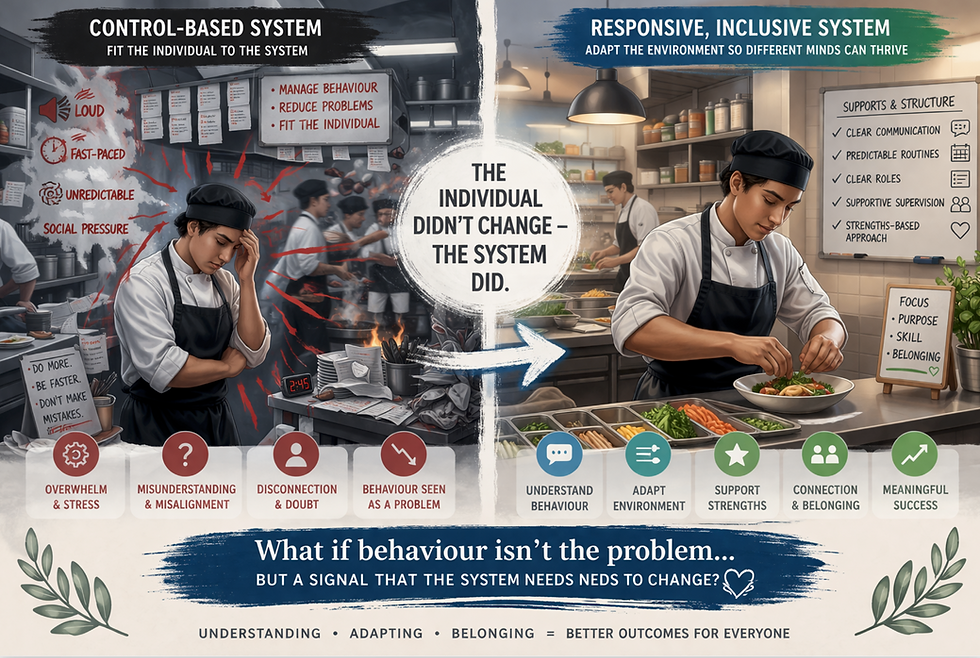
With autism support, the focus is a bit more specific, but the idea is the same. The behaviour is communication. Even when it doesn’t look like it. Often the behaviour is doing a job—avoiding something overwhelming, trying to make sense of a situation, or expressing a need that doesn’t have another outlet yet. So the work becomes: what is this child trying to say or manage, and how do we help them do that in a way that actually works? That might mean building more reliable communication—spoken, visual, or otherwise. It might mean adjusting expectations so they match where the child actually is, not where we hope they’ll be. It often means looking at sensory or cognitive load—how much is being asked, how quickly, and in what way. It also usually means helping the adults around the child feel more steady. When parents and teachers feel unsure, it shows up in how situations are handled. When they feel clearer, things tend to settle, even before the child changes much.
Remote work doesn’t really limit any of that. If anything, it keeps things grounded in real situations instead of staged ones. You’re working with what actually happens, not what someone thinks might happen in a clinic. If you’re doing this kind of support, a few things make it easier.
Have a space where you can actually think during the call. It doesn’t need to be perfect—just somewhere you’re not being pulled in three directions.
Keep track of a few examples during the week. Not everything—just a couple of moments that stood out. What happened before, what the behaviour looked like, how it ended. That’s usually enough to work with.
Be straightforward about what’s not working. There’s no upside to softening it or leaving parts out. The more real it is, the more useful the support will be.
And don’t expect quick fixes. When things improve, it’s usually gradual. A little less intensity here, a slightly smoother transition there, a shorter recovery after something goes wrong. Those small shifts are what build into bigger change.

It also helps to expect some trial and error. If something doesn’t work, that’s information, not failure. It tells you something about what the behaviour needs. This kind of support works because it meets you where you are. It doesn’t ask you to step outside your life to fix things. It works inside it. It’s not about doing everything “right.” It’s about understanding what’s going on a bit more clearly, responding a bit more intentionally, and making things more manageable over time.
If things have been tough for a while, getting another set of eyes on it can help. Not to take over—but to help you see what you might be missing and give you something concrete to try next.

Comments